



Why Mid-Summer Deep Cleaning Protects Your Aluminum Transport Flooring
Executing rigorous horse trailer maintenance is the single most critical task for protecting your horses during transport and safeguarding your financial investment. Regular mid-summer deep cleaning neutralizes highly alkaline equine urine and trapped ammonia salts before they can dissolve the protective aluminum oxide layer. Decontaminating the bare metal panels beneath your rubber floor mats halts subsurface pitting corrosion and prevents catastrophic structural flooring failure.
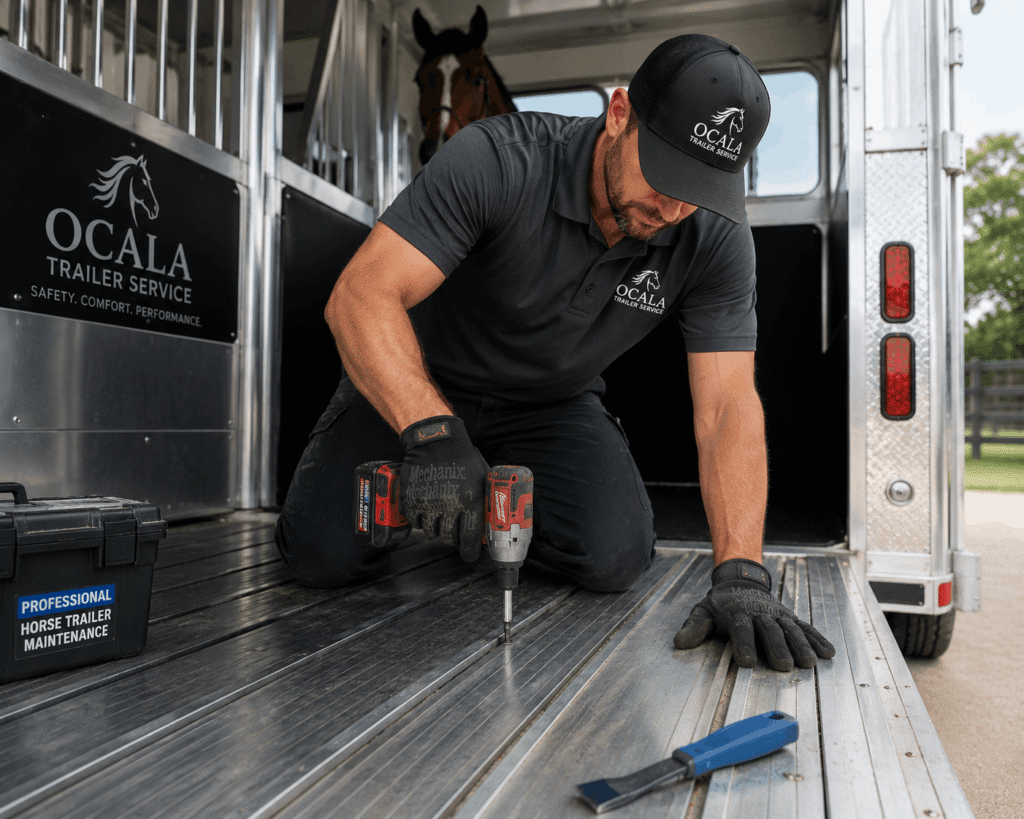
As an equine handler based in Ocala, Florida, the historic Horse Capital of the World, your trailer is not merely a vehicle. It is a mobile sanctuary designed to ferry elite athletes, beloved companions, and high-value livestock across state lines. Unfortunately, many trailer owners are unaware of a structural threat that peaks during the sweltering summer months: aluminum corrosion. While aluminum is universally praised for its lightweight properties and its immunity to iron-based red rust, it is far from indestructible. When subjected to extreme environmental stressors, it degrades with alarming speed.
📌 Key Takeaways
The Ammonia Threat: Equine waste produces alkaline ammonia that actively dissolves the protective oxide layer of aluminum alloys.
The Heat Multiplier: Summer temperatures above 100°F double the speed of electrochemical metal degradation.
The Hidden Hazard: Heavy rubber floor mats trap moisture and corrosive mixtures, hiding structural rot from plain sight.
DIY Risks: Retail acid brighteners strip away vital metal thickness and alter structural integrity if misapplied.
Long-Term Shielding: Applying aerospace-grade ceramic coatings provides a permanent barrier against future biological acid damage.
Table of Contents
The Dangerous Myth of the Maintenance-Free Aluminum Trailer
The Mid-Summer Threat Matrix: Temperature and Corrosion Speed
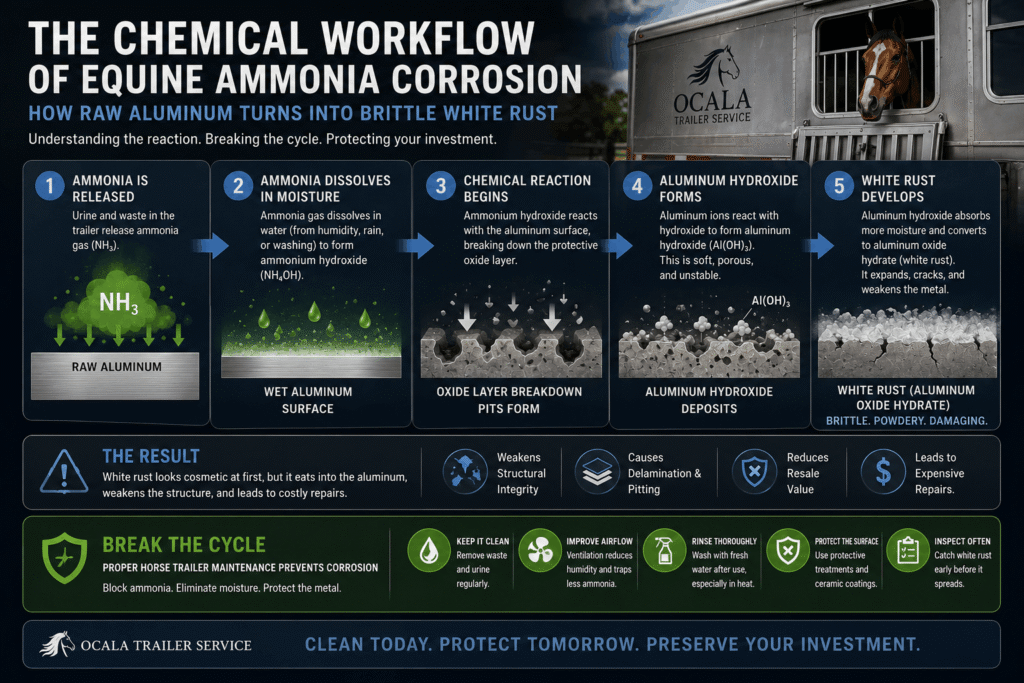
The Chemistry of Corrosion: How Structural Metal Melts
The Hidden Hazard: What Lurks Beneath Rubber Mats
Why DIY Horse Trailer Maintenance Risks Your Investment
The Professional Advantage: Precision Metal Preservation
Our Specialized Decontamination and Curing Protocol
Long-Term Protection: Shielding With Advanced Ceramic Coatings
Frequently Asked Questions About Horse Trailer Maintenance
The Dangerous Myth of the Maintenance-Free Aluminum Trailer
Quick Answer
Aluminum forms a natural protective oxide layer that resists clean water but dissolves quickly when exposed to acidic equine waste. Without consistent cleaning, the metal develops white rust pitting that leaves structural components prone to sudden failure.
A pervasive and costly misconception within the equestrian community is that aluminum haulers do not require ongoing structural cleaning. Trailer manufacturers often lean into marketing campaigns that frame aluminum as a permanent, zero-maintenance alternative to steel. This is a partial truth that can cause devastating real-world failures.
Understanding Passive Aluminum Oxide
When raw aluminum is exposed to clean ambient air, it quickly forms a microscopic, self-passivating layer of aluminum oxide. This layer acts as a barrier against pure water. However, when this delicate oxide layer encounters acidic or alkaline chemical compounds, it dissolves completely.
The Progression of Pitting Damage
Once breached, the underlying metal undergoes an electrochemical breakdown known as white rust or aluminum pitting. This manifests as a dull, chalky white powder that eats deep, microscopic craters into the metal. Over time, these microscopic pits merge into structural stress cracks.
If left unmanaged, the load-bearing integrity of your trailer’s floorboards, structural welds, and ramp hinges will fail. This can cause catastrophic floor collapse accidents while traveling on the highway. Consistent, professional horse trailer maintenance is the only verified way to intercept this silent degradation pattern.
The Mid-Summer Threat Matrix: Temperature and Corrosion Speed
Quick Answer
High summer heat accelerates chemical reactions, causing the rate of metal corrosion to double for every 18°F increase in temperature. High humidity keeps the metal surfaces wet, turning your trailer’s floor into an active, destructive battery cell.
Mid-summer creates the perfect environment for chemical reactions to accelerate. In climates characterized by high ambient moisture, such as the Southeastern United States, the combination of intense UV rays, relentless relative humidity, and sudden thermal shifts creates a highly corrosive environment for transport equipment.
📊 Data Point: According to established thermodynamic principles, the rate of chemical reactions generally doubles or triples for every 10°C (18°F) rise in temperature. As of 2026, shifting regional weather anomalies are pushing seasonal trailer interior heat indexes higher than ever before.
The Role of Trapped Humidity
When the interior temperature of an enclosed aluminum trailer crosses 100°F under direct summer sunlight, any chemical contaminant sitting on the metal goes into overdrive. High atmospheric humidity keeps these contaminants in a constantly damp, liquid state.
This moisture profile prevents them from drying out into an inert powder. This continuous moisture cycle turns your trailer’s floor and seams into an active electrochemical cell, accelerating structural decay far faster than during the dry winter months.
The Chemistry of Corrosion: How Structural Metal Melts
Quick Answer
Equine urine transforms into ammonia, which destroys the protective layers of your aluminum trailer. Meanwhile, road grime delivers chloride ions that aggressively attack the vehicle’s undercarriage and support beams.
To understand why simple rinsing is inadequate for long-term protection, you must examine the exact chemical reactions occurring within the horse stall area. The primary culprit behind structural aluminum failure is equine urine and manure.
How Ammonia Breaks Down Metal
Ammonia is highly alkaline, and it aggressively attacks the protective oxide layer of aluminum alloys. As your horses sweat and urinate during hot summer hauls, this corrosive liquid migrates into the tight gaps surrounding structural rivets, seams, and floorboards.
As the water evaporates in the summer heat, concentrated ammonia salts remain behind. This residue continuously dissolves the metal substrate.
The Onslaught of Environmental Chlorides
Externally, trailers face a completely different chemical threat. Road grime, tire debris, industrial air pollution, and ocean air currents deliver chloride ions that settle on the trailer’s nose cone, fenders, and undercarriage.
As documented by established academic resources like the Michigan State University Extension, these external corrosive elements quickly eat away at structural support beams underneath the floorboards. This leaves the trailer dangerously vulnerable to collapse if left untreated.
The Hidden Hazard: What Lurks Beneath Rubber Mats
Quick Answer
Thick rubber floor mats trap water, organic acids, and ammonia salts directly against the aluminum floorboards. This creates a stagnant, oxygen-deprived sludge that quickly destroys metal support beams out of sight.
The most vulnerable zone in any trailer is the area directly beneath the thick rubber floor mats. Many conscientious owners perform what they believe is thorough horse trailer maintenance by spraying down the interior stall area after a trip. However, a superficial rinse without removing the mats often does more harm than good.
The Danger of Trapped Contaminants
Washing down a trailer with the rubber mats installed forces water, dissolved organic acids, and ammonia salts into the tiny spaces between the mats and the aluminum floor. Once trapped underneath, the thick rubber prevents airflow and eliminates any chance of natural evaporation.
| Environmental Threat Factor | Impact on Raw Aluminum Floor | Impact on Sealed/Coated Floor |
| Trapped Ammonia Liquid | Severe structural pitting and weld embrittlement | Chemical neutralization; zero metal contact |
| High Ambient Air Heat | Multiplies the speed of metal oxidation | None; coating remains structurally stable |
| Chloride Road Grime | Deep metal pitting and cosmetic clouding | Deflected completely by protective layer |
| Anaerobic Microbes | Biological corrosion and persistent odors | Eradicated during deep disinfection |
This trapped mixture creates a stagnant, corrosive sludge that quietly eats through the floor panels and structural crossmembers. This hidden damage progresses completely out of sight until the floor’s structural capacity is permanently compromised.
⚠️ Common Mistake: Leaving rubber mats inside the trailer all summer while executing basic washdowns will accelerate floor rot. Mats must be completely removed to allow the underlying metal to dry out completely.
Why DIY Horse Trailer Maintenance Risks Your Investment
Quick Answer
Amateur cleaning often relies on aggressive, unbuffered retail acids that etch deep pores into the aluminum. Additionally, high-pressure washing can tear up wiring harnesses and force water into interior insulation, breeding mold.
When evaluating how to address mid-summer buildup, the temptation to handle it yourself using consumer equipment can be high. However, amateur horse trailer cleaning presents significant financial and safety risks due to improper tools, aggressive chemicals, and a lack of specialized knowledge.
The Destructive Reality of Acidic Brighteners
Many retail aluminum cleaners readily available to consumers rely on highly aggressive acids, such as hydrofluoric or muriatic acid. While these chemicals can instantly strip away chalky oxidation to reveal white, bright metal, they do so by dissolving a layer of the aluminum itself.
If these acids are left on the surface for even a minute too long, they etch deep pores into the metal. They can also cause issues if they are not perfectly neutralized with an alkaline agent. This leaves the aluminum permanently rough, heavily dulled, and highly susceptible to rapid re-corrosion.
The Danger of High-Pressure Water Stripping
Consumer-grade pressure washers used without proper training can cause significant structural damage. Excessive pressure can easily slice through delicate factory seam sealants. It can also force water past weather stripping into interior insulation layers, or tear up vital wiring harnesses.
Trapped water inside double-walled insulated trailers creates hidden mold colonies. This results in slow, unnoticeable structural degradation from the inside out.
The Absence of Technical Inspection Capabilities
DIY cleaning is purely cosmetic. An amateur owner does not possess the structural knowledge, specialized lighting, or diagnostic tools required to identify early signs of stress fractures, failing pop-rivets, or galvanic corrosion.
Galvanic corrosion occurs wherever steel bolts or axles come into direct contact with an aluminum frame, causing the aluminum to sacrifice itself and degrade at an alarming rate. Missing these indicators can put your horses at risk on your next trip.
Why Certified Professional Applications Outperform DIY Methods
Quick Answer
Professional detailers use commercial-grade, pH-balanced decontamination steps designed specifically for structural aviation and marine-grade alloys. This process lifts organic acids without altering or thinning the metal.
Opting for professional horse trailer maintenance eliminates the risks of DIY attempts while providing deep, long-lasting structural protection. At Ocala Detailing, we manage equine transport equipment with the exact same technical precision, high-end chemical selection, and care that we bring to luxury exotic vehicles.
Safe, Non-Acidic Chemical Solutions
Our highly trained specialists use commercial-grade, pH-balanced decontamination steps designed specifically for aviation and marine-grade aluminum alloys. We do not use generic, highly destructive acid washes. Instead, we employ a multi-stage process that lifts organic acids, road oils, and oxidation without altering the profile or thickness of the metal.
💡 Expert Insight: According to metal preservation standards published by ASM International, industrial aluminum alloys require precise pH monitoring during decontamination to avoid hydrogen embrittlement across critical welds.
Outsourcing this labor-intensive process saves you from hours of grueling physical labor in the summer heat. It ensures your trailer is cared for safely, effectively, and in full compliance with local environmental runoff standards.
Our Specialized Decontamination and Curing Protocol
Quick Answer
Our multi-step system completely removes all rubber mats, neutralizes biological wastes with specialized enzymes, flushes the undercarriage, and uses low-pressure steam to protect factory seals.
A true mid-summer deep clean requires an intensive system to eliminate corrosive threats at their root. Our mobile detailing units follow a strict, multi-point protocol designed to fully restore and protect your trailer:
Complete Rubber Mat Extraction: We completely remove all heavy rubber mats from the trailer stall. The mats are scrubbed, pressure-washed, disinfected, and deodorized externally.
Biological & Chemical Neutralization: We apply specialized, non-corrosive enzymes that liquefy dried organic matter and safely neutralize embedded ammonia residues on the floorboards.
High-Flow, Temperature-Controlled Steam Decontamination: Utilizing targeted low-pressure steam, we safely flush out dirt, debris, and insect nests from window slides, drop-down gates, and structural rivets without harming factory seals.
Mechanical Aluminum Stabilization: We apply advanced, non-acidic brighteners combined with mechanical polishing to safely remove oxidation and restore a smooth, clean finish.
Full Undercarriage Debris Flush: We thoroughly clean the trailer’s frame and suspension components to clear away road salts, mud, and grime collected during highway travel.
Long-Term Protection: Shielding With Advanced Ceramic Coatings
Quick Answer
Upgrading to a professional ceramic coating creates a permanent, hydrophobic bond with the aluminum. This industrial shield repels moisture, sweat, and ammonia, which drastically simplifies your post-trip cleanups.
Once the aluminum is completely clean, bare metal should never be left exposed to the elements. Without a protective barrier, the oxidation process starts again almost immediately upon exposure to air and moisture. To solve this problem long-term, we highly recommend upgrading your package to include a professional ceramic coating.
The Power of Ceramic Bonding
Unlike traditional automotive waxes that melt off under the hot summer sun within weeks, a ceramic coating forms a permanent, molecular bond with the aluminum surface. This ultra-hard, hydrophobic shield offers key structural advantages:
Industrial-Grade Chemical Defense: Prevents ammonia, horse sweat, and acidic rain from directly contacting or etching the aluminum metal.
Hydrophobic Self-Cleaning Properties: Creates a smooth, non-stick surface that repels mud and road grime, making post-trip rinse-downs quick and easy.
Advanced UV Blocking: Protects custom vinyl wraps, painted exterior panels, and polished metal finishes from fading and heat damage caused by intense summer sunlight.
Integrating these aerospace-grade coatings into your routine extends your trailer’s lifespan, lowers future maintenance costs, and helps preserve its resale value.
✅ Quick Tip: Treating the exterior nose cone of your hauler with a ceramic layer makes removing baked-on highway bugs and road tar effortless during your regular home maintenance washes.
Frequently Asked Questions About Horse Trailer Maintenance
Why is horse trailer maintenance so important during the summer months?
High summer temperatures drastically speed up chemical reactions, causing acidic equine waste and road salts to corrode aluminum surfaces twice as fast. Regular cleaning keeps these harmful elements from causing hidden structural rot.
How often should I pull up my rubber mats for cleaning?
You should completely pull up your rubber mats for an intensive deep clean at least twice a year, with mid-summer being the most critical period. Rinsing over the top of installed mats traps corrosive ammonia sludge underneath, accelerating metal damage.
Will regular retail aluminum brighteners damage my trailer frame?
Yes, many retail brighteners contain harsh, unbuffered chemicals like hydrofluoric acid that strip away layers of actual metal. If left on too long, they can permanently etch your aluminum and weaken structural welds.
What are the main signs of aluminum corrosion in a horse trailer?
Look for a dull, chalky white powder forming on the metal surfaces, alongside tiny pit craters or rough patches. If neglected, these small pits will turn into visible structural cracks along the floorboards and seams.
Can a ceramic coating be applied safely to an older horse trailer?
Yes, an older trailer can be treated successfully provided it undergoes deep professional decontamination and mechanical polishing first. The coating will seal the restored metal and shield it from future environmental damage.
Prioritize Your Horse Trailer Maintenance and Protect Your Journeys
Consistently prioritizing your horse trailer maintenance is essential for protecting your horses and your financial assets. Allowing biological acids and road salts to build up during the hot, humid summer months invites structural corrosion. This can lead to hazardous transport conditions and very expensive repairs down the road.
Avoid the physical exhaustion and significant structural risks that come with amateur DIY cleaning methods. Trust certified detailing specialists who understand the science of metal preservation.
Give your trailer the ultimate defense it needs this season. Head over to our Ocala Detailing contact page today to consult with our team or schedule your comprehensive mobile detailing appointment. Keep your investments gleaming, your equipment structurally sound, and your horses safe on every journey.