



How Ocala RV Owners Restore Faded Fiberglass Before Summer Ends
A professional gelcoat restoration fixes faded, chalky RV paint by mechanically shaving away micro-layers of dead, oxidized resin to expose fresh material underneath. In Central Florida, intense UV radiation splits the molecular bonds of your vehicle’s outer skin, turning it into a highly porous sponge. Executing this restoration process levels the surface profile and seals it with a protective barrier to halt deeper fiberglass rot.
If you own a motorhome, fifth wheel, or travel trailer in Central Florida, you already know how brutal the tropical elements can be. Driving down Interstate 75 or leaving your rig parked near the unshaded expanses of the Ocala National Forest exposes it to blistering heat and intense ultraviolet (UV) radiation. Over time, that glossy, beautiful factory finish transforms into a dull, white, powdery mess. Investing in a timely gelcoat restoration is the most crucial maintenance choice you can make for your vehicle this season.
📌 Key Takeaways
The Oxidation Warning: White, chalky powder is dead resin material that acts as a structural sponge for mold, grime, and water.
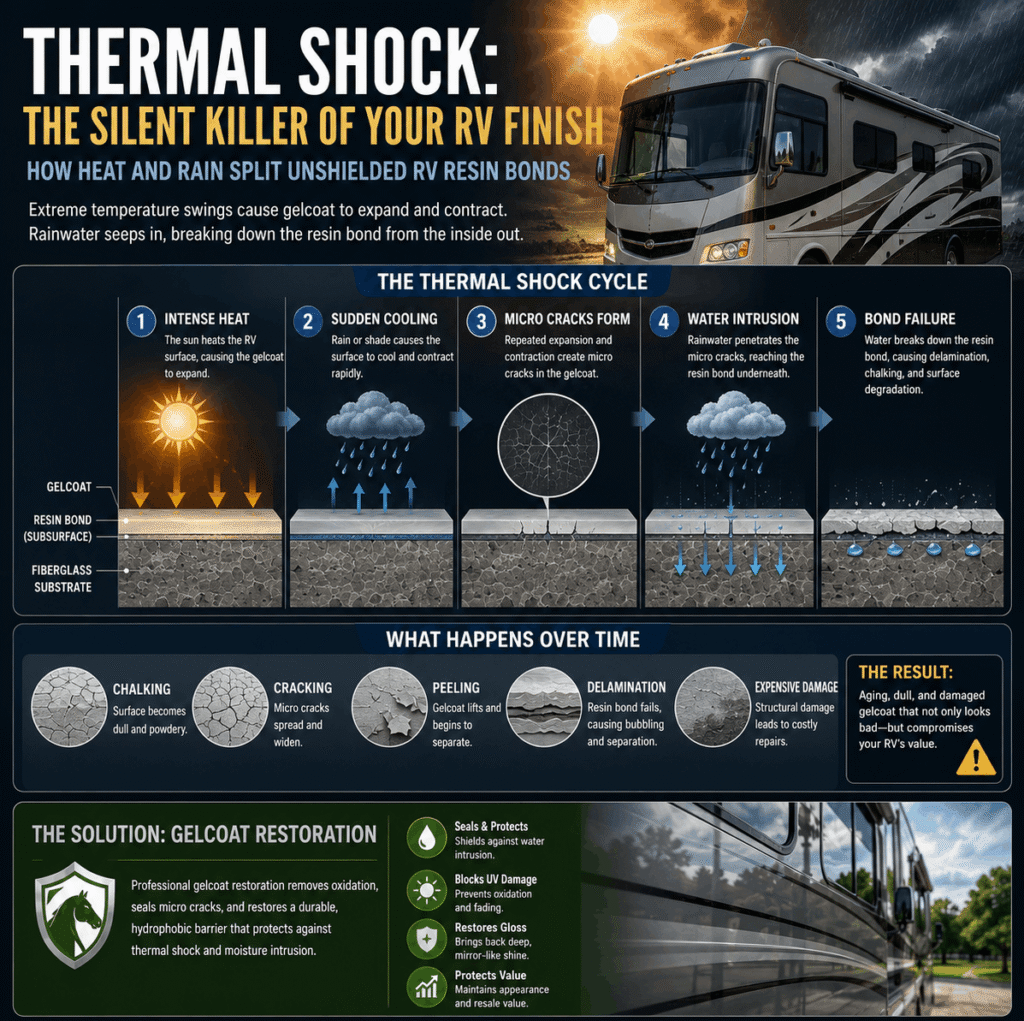
The Thermal Threat: Drastic temperature drops from sudden afternoon rainstorms create micro-fractures in your RV’s exterior skin.
DIY Failures: Standard retail orbital buffers lack the rotary torque needed to level oxidized resins, often leaving streaks.
The Restorative Fix: True restoration requires heavy wool cutting pads and diminishing abrasives to smoothly shave away dead material.
Long-Term Protection: Sealing the freshly leveled resin with a premium ceramic coating blocks UV rays for up to five years.
Table of Contents
The Material Science Behind Faded Chalky RV Surfaces
Why Ocalas Summer Climate Accelerates Fiber Skin Destruction
The Dangers and Expensive Failures of DIY Restoration Projects
The Professional Process: Multi-Stage Correction Explained
Long-Term Protection: Shielding Your Restored Finish From Future Decay
Why Choose Ocala Detailing for Your Motorhome Care
Frequently Asked Questions About Gelcoat Restoration
The Material Science Behind Faded Chalky RV Surfaces
Quick Answer
Unlike cars, RVs feature a thick, tinted resin skin known as a gelcoat applied over a fiberglass substrate. Continuous exposure to oxygen and UV light causes oxidation, which breaks down the resin’s molecular structure and leaves behind a powdery residue.
To understand why an RV loses its high-gloss shine, you have to look closely at how its exterior walls are constructed. Unlike modern cars or trucks that feature a thin base coat of colored paint covered by a protective clear coat layer, most recreational vehicles utilize a thick, tinted resin compound known as a gelcoat.
How Oxidation Traps Contaminants
This specialized layer is applied directly into a structural mold over a fiberglass substrate during manufacturing. It creates a smooth, durable, weather-resistant outer skin. When this surface layer experiences continuous exposure to atmospheric oxygen and intense solar radiation, a destructive chemical breakdown called oxidation occurs.
The ultraviolet light snaps the molecular bonds within the resin. This causes it to become increasingly porous, dry, and fragile. That white, chalky powder you can scrape off with your fingertip is actually dead, degraded resin material.
Preventing Deeper Lamination Rot
Once this powder forms, the surface becomes rough and deeply porous. It acts like a structural sponge for road grime, black streaks, mold spores, and acidic rainwater.
💡 Expert Insight: According to surface material standards monitored by the Society of Automotive Engineers (SAE), advanced resin oxidation completely compromises structural weatherproofing if left untreated. Once moisture penetrates beneath this porous outer boundary, it can rot the internal lamination layers. Investing in a proper gelcoat restoration is the only verified way to prevent this subsurface failure.
Why Ocala’s Summer Climate Accelerates Fiber Skin Destruction
Quick Answer
Central Florida’s high UV index breaks resin chemical bonds while extreme 140°F surface heat expands fiberglass panels. When sudden cold afternoon rain showers hit the rig, the rapid contraction forms microscopic cracks that trap moisture.
Central Florida features unique environmental factors that create a worst-case scenario for exterior gelcoat preservation. Ocala experiences an average of over 230 sunny days per year. Summer afternoon temperatures regularly climb past 90°F.
| Climate Factor | Damage Mechanism to Gelcoat |
| High Ultraviolet Index (UV 10+) | Breaks chemical bonds in outer resin layers |
| Thermal Expansion & Contraction | Creates micro-fractures in the structural surface |
| Intense Humidity & Acidic Rain | Traps moisture and minerals inside surface pores |
The Impact of Rapid Temperature Drops
During peak summer, surface temperatures on an unshaded sidewall can cross 140°F. This extreme heat causes the underlying fiberglass panels to physically expand. When heavy afternoon thunderstorms roll in, the surface temperature drops rapidly.
This temperature spike forces the material to contract instantly. This continuous cycle of expanding and shrinking creates microscopic cracks across the exterior surface.
Once these micro-fractures form, moisture from high humidity gets trapped deep within the wall skin. This results in deep, embedded stains that standard washing cannot remove.
The Dangers and Expensive Failures of DIY Restoration Projects
Quick Answer
Consumer-grade orbital buffers lack the necessary torque to level dense, oxidized resins. Amateur attempts often burn through graphic decals, while retail products rely on temporary oils that wash away in the next rainstorm.
When owners notice their vehicle looking dull, their first instinct is to attempt a weekend restoration project. However, executing a proper gelcoat restoration requires deep industrial knowledge and heavy commercial machinery. Attempting to tackle this process on your own frequently results in costly mistakes.
Inadequate Consumer Equipment
Standard dual-action orbital buffers designed for consumer garages do not generate necessary torque or consistent friction heat. Correcting hard fiberglass shells requires heavy-duty, high-torque rotary polishers.
If used by an untrained operator, a heavy rotary machine can easily catch an edge. It can burn straight through graphic decals or cut entirely through the thin resin skin down to bare fiberglass matting.
Chemically Flawed Retail Fillers
Many mass-market products rely heavily on temporary chemical fillers and heavy silicone oils. While these formulas make your sidewalls look shiny for a few days, they merely mask underlying porosity without actually leveling away dead material.
⚠️ Common Mistake: Relying on cheap retail “restorer” liquids will fail within weeks. The oils wash away in typical Florida rainstorms, exposing the chalky white powder all over again.
Physical Strain and Safety Hazards
An average Class A motorhome features hundreds of square feet of vertical workspace. Safely polishing these high zones requires commercial scaffolding, heavy safety harnesses, and proper respiratory protection to avoid inhaling hazardous fiberglass dust. Climbing up and down extension ladders while operating an eight-pound tool for hours is an open invitation for accidental falls.
The Professional Process: Multi-Stage Correction Explained
Quick Answer
True restoration uses a multi-stage approach including high-pH stripping washes, heavy wool pad compounding with diminishing abrasives to shave away dead resin, and micro-fine foam pad polishing to restore a mirror reflection.
True gelcoat restoration is an intricate, multi-stage correction procedure. It safely peels back microscopic layers of damaged material to reveal fresh, unoxidized resin underneath. At Ocala Detailing, our team follows a rigorous, industrial-grade process tailored to the exact condition of your coach.
Phase 1: High-Pressure Decontamination Wash
Before any machine touches the vehicle, the exterior must be completely clean. We execute a deep decontamination wash using specialized, high-pH stripping cleansers. This step eliminates old wax layers, road oils, tree sap, and surface black streaks. We also perform an iron decontamination treatment to pull embedded metallic fallout out of the surface pores.
Phase 2: Multi-Stage Compounding and Mechanical Leveling
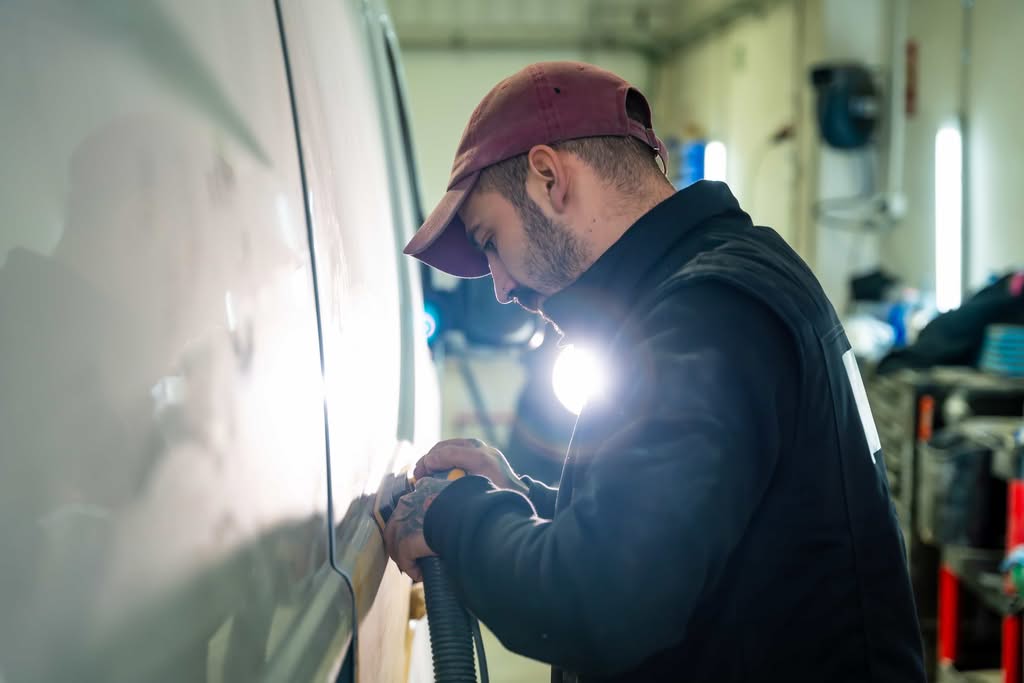
Once the surface is completely clean, our specialists inspect the depth of the damage. For severe oxidation, we utilize a heavy-duty wool cutting pad paired with an aggressive, diminishing-abrasive compound.
The wool pad generates controlled friction heat. This allows abrasive particles to break down smoothly while shaving away dead, chalky powder. This step levels the microscopic peaks and valleys of the damaged skin, restoring structural clarity to the surface.
Phase 3: Micro-Fine Jeweling Polish
Heavy compounding leaves behind minor swirl marks and light haze. To eliminate these imperfections, we shift to a fine foam finishing pad and an ultra-fine finishing polish. This step refines the surface texture, smoothing away remaining micro-scratches and bringing back a deep, mirror-like reflection.
Long-Term Protection: Shielding Your Restored Finish From Future Decay
Quick Answer
Freshly polished resin must be sealed immediately to prevent rapid re-oxidation. While traditional paste waxes quickly melt off under the Florida sun, commercial-grade ceramic coatings offer up to five years of chemical and UV defense.
Shaving away the dead materials and restoring that deep gloss is only half the battle. Because the freshly polished layer is clean and completely unprotected, leaving it exposed to the elements would cause the oxidation process to restart almost immediately. Applying premium surface protectants is essential to lock in your newly restored finish.
| Protection Type | Longevity & Performance Level |
| Standard Carnauba Wax | 6 to 8 weeks; low heat resistance |
| Premium Polymer Sealants | 4 to 6 months; moderate UV protection |
| Commercial Ceramic Coatings | 2 to 5 years; ultimate UV/acid defense |
The Power of Ceramic Glass Shields
While traditional paste waxes melt away quickly under the intense Florida sun, advanced polymer sealants create cross-linked chemical bonds across the surface to form a durable barrier. For the ultimate defense, we highly recommend upgrading to a professional-grade ceramic coating.
📊 Data Point: Industry data gathered through specialized testing networks shows that aerospace-grade silicon dioxide (SiO_2) coatings filter out up to 98% of solar UV radiation. This effectively stops the chemical degradation cycle from restarting on underlying resin molecules.
These advanced formulas utilize silicon dioxide (SiO_2) technology to fill every remaining microscopic pore in the wall skin. This creates a glass-like barrier that blocks out UV rays, resists acid rain, and makes washing away road grime effortless.
✅ Quick Tip: Adding a ceramic layer to your fiberglass shell prevents black streaks from bonding to the surface, allowing you to wipe them away with a simple water rinse.
Why Choose Ocala Detailing for Your Motorhome Care
Quick Answer
Our experienced detailing team utilizes specialized commercial machinery and custom chemical formulas calibrated for Ocala’s harsh environment. We preserve your asset’s resale value while delivering long-lasting, showroom results.
Your motorhome is a major financial asset, and protecting its exterior surfaces requires expert care. Trusting your vehicle to inexperienced workers or attempting to resolve deep oxidation on your own often ends in frustration and costly surface damage. Our experienced detailing professionals understand the unique challenges presented by local weather conditions.
We use premium commercial tools, industry-leading abrasive compounds, and top-tier protective sealants to ensure your coach leaves our facility looking like it just rolled off the showroom floor. Don’t let the harsh summer sun permanently damage your vehicle’s exterior shell.
Head over to our official booking platform to explore our complete menu of professional care packages. Contact our team today to learn more about our comprehensive exterior care options.
Frequently Asked Questions About Gelcoat Restoration
Why does my RV develop a white, chalky powder on the exterior?
The white powder is dead resin material caused by severe surface oxidation. When your RV’s gelcoat is continuously exposed to intense atmospheric oxygen and harsh solar UV rays, the molecular bonds within the resin split apart and degrade.
Can I fix severe gelcoat restoration issues using a standard car wash?
No, standard washing cannot fix these issues because the chalkiness is a physical breakdown of the metal-adjacent resin rather than simple surface grime. Resolving it requires mechanical leveling with high-torque rotary machinery and specialized abrasive compounds.
How do professional detailers remove heavy oxidation without damaging the fiberglass?
Professional technicians utilize high-torque rotary polishers paired with heavy wool cutting pads and diminishing abrasives. This combination generates controlled friction heat to safely shave away the micro-layers of dead resin without cutting down into the underlying fiberglass matting.
How long will a professional gelcoat restoration last under the Florida sun?
The longevity depends heavily on the chosen protective topcoat. A standard wax lasts only 6 to 8 weeks, while an advanced ceramic coating application seals the restored resin for 2 to 5 years by filtering out destructive ultraviolet rays.
Is it safe to apply retail acidic brighteners to my RV’s exterior skin?
No, mass-market chemical brighteners often contain harsh, unbuffered acids that etch deep pores into the delicate resin layer. This leaves the surface permanently rough, causing it to re-oxidize and trap road grime much faster than before.
Prioritize Your Vehicle’s Exterior Protection Today
Don’t let the harsh Central Florida sun permanently damage your vehicle’s delicate outer shell. Trusting your motorhome or travel trailer to certified specialists who understand the science of gelcoat restoration is the ultimate way to secure your investment’s long-term resale value. Your coach will effortlessly repel acid rain, maintain a brilliant mirror-like gloss, and turn heads wherever your travels take you.
Contact the dedicated team at Ocala Detailing today to schedule your comprehensive exterior evaluation, consult with an expert technician, and give your RV the elite protection it truly deserves.