



Why Does Your Car Paint Feel Rough? The Importance of Clay Bar Decontamination
Clay bar treatment for cars Marion County is the secret weapon of professional detailers, yet it remains one of the most misunderstood steps in automotive care. Imagine you’ve just spent two hours washing your car in your Ocala driveway. The soap is rinsed, the wheels are shining, but when you run your hand across the hood, it feels like fine-grit sandpaper. This roughness isn’t dirt; it’s bonded contamination that a standard wash simply cannot touch.
In Marion County, our vehicles face a unique “atmospheric cocktail.” From the sticky pine sap in Silver Springs to the industrial fallout near Ocala’s commercial corridors and the relentless clay dust of our rural backroads, your paint is under constant siege. At Ocala Detailing, we know that if your paint feels rough, your wax or ceramic coating won’t bond properly. A professional clay bar treatment is the only way to hit the “reset button” on your vehicle’s finish.
Table of Contents
What Exactly is a Clay Bar Treatment?
The Marion County “Rough Paint” Culprits
The Science of Decontamination: How Clay Works
Why Washing Alone Isn’t Enough
The Professional Process at Ocala Detailing
Frequently Asked Questions (FAQ)
Conclusion: Restoring the Glass-Like Finish
What Exactly is a Clay Bar Treatment?
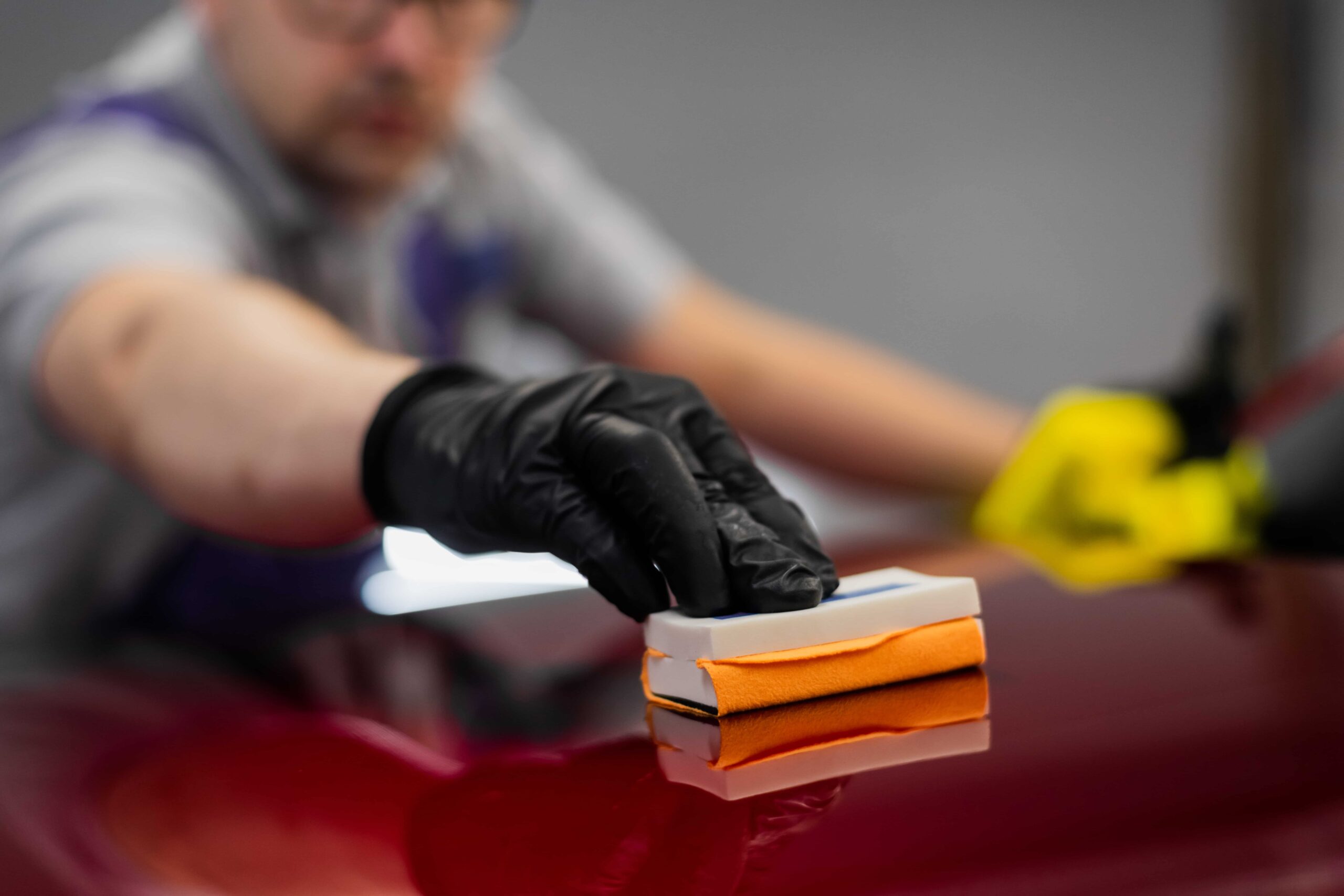
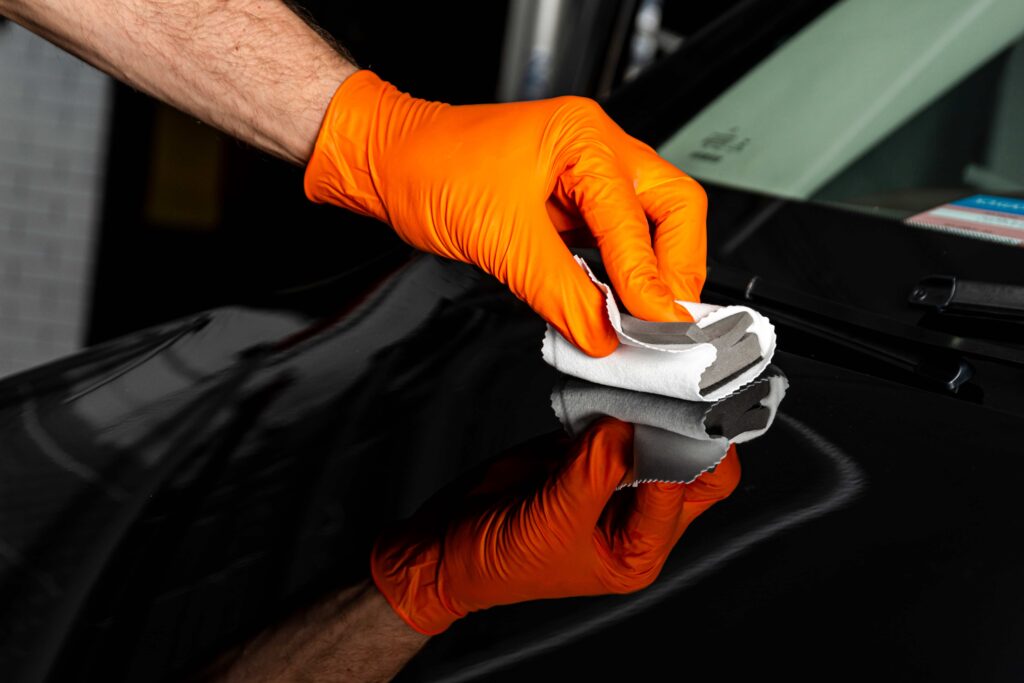
A clay bar is a specially engineered resin compound designed to pull microscopic debris out of your car’s clear coat. Unlike the clay you might find in an art class, detailing clay is elastic and mildly abrasive—just enough to shear off surface contaminants without harming the paint beneath.
When we perform a clay bar treatment for cars Marion County, we use the clay to “shave” the surface of the paint. It glides on a layer of specialized lubricant, picking up everything that shouldn’t be there and trapping it inside the clay’s structure. The result is a surface so smooth it feels like glass.
The Marion County “Rough Paint” Culprits
Why is clay bar treatment for cars Marion County so essential for local drivers? Our environment is particularly aggressive toward clear coats.
Industrial Fallout: Rail lines and industrial zones in Ocala release tiny metal shavings into the air. These hot particles “melt” into your clear coat and begin to rust.
Love Bugs & Tree Sap: In areas like The Villages or Bellechase, organic acids from bugs and sap can etch into the paint. While clay removes the residue, it’s a vital step before paint correction to fix the etching.
Brake Dust: Every time you stop at a light on SR-200, your brakes release metallic dust. This dust is highly corrosive and creates those tiny black or orange dots you see on your bumpers.
Overspray: With the growth in Golden Ocala and On Top of the World, construction paint overspray often drifts onto nearby parked cars.
The Science of Decontamination: How Clay Works
Think of your car’s paint not as a flat sheet, but as a surface with “pores.” Over time, pollutants get lodged in these microscopic valleys.
During a clay bar treatment for cars Marion County, the lubricant creates a thin barrier. As the clay glides over, it creates a vacuum-like effect, pulling the bonded particles upward. If you skip this and go straight to waxing, you are essentially “sealing in” the sandpaper texture, which eventually leads to oxidation and paint failure.
Why Washing Alone Isn’t Enough
Many of our fleet & commercial clients ask: “Why can’t I just use a stronger soap?” The truth is that soaps are designed to remove loose dirt (mud, dust, road film). Bonded contaminants have a chemical or physical “grip” on the clear coat.
If you try to scrub these off with a wash mitt, you risk dragging the sharp particles across the paint, creating swirl marks. A professional exterior only wash followed by claying ensures that these particles are lifted safely away from the surface rather than ground into it.
The Professional Process at Ocala Detailing
When you book a Gold Detail or Platinum Detail with Ocala Detailing, our clay bar process follows a strict protocol:
Chemical Decon: Before the clay touches the car, we use an iron-remover to dissolve metallic fallout chemically.
Mechanical Claying: We use a medium or fine-grade clay bar (depending on the paint’s condition) to manually decontaminate every inch of the exterior.
Surface Inspection: We use the “baggie test”—feeling the paint through a plastic bag—to ensure 100% of the grit is gone.
Protection: Since claying strips away old waxes, we always follow up with a high-quality sealant or a ceramic coating to lock in the shine.
Frequently Asked Questions (FAQ)
How often should I get a clay bar treatment?
For vehicles in Ocala and The Villages, we recommend a treatment twice a year. If your car is parked outdoors near trees or construction, quarterly service may be better.
Can a clay bar remove scratches?
No. A clay bar removes above-surface contaminants. To remove scratches, you need paint correction, which levels the clear coat itself.
Is claying safe for my ceramic coating?
Traditional claying can be abrasive to some coatings. We use synthetic clay mitts or specialized chemical decontaminants to refresh a coated vehicle without damaging the protective layer.
Restoring the Glass-Like Finish
Neglecting the “rough” feeling of your paint isn’t just an aesthetic issue; it’s a maintenance one. Clay bar treatment for cars Marion County is the foundation of any high-end detailing service. By removing the hidden enemies stuck to your clear coat, you extend the life of your paint and ensure your vehicle looks its best from Golden Ocala to Silver Springs.
At Ocala Detailing, we bring the expertise and the tools directly to you. Whether you need a simple headlight restoration or a full ceramic coating prep, our team is ready to restore your car’s factory-smooth feel.
Don’t drive a “sandpaper” car. Contact Ocala Detailing for a Professional Clay Bar Quote Today