






The Hidden Hazard on Ocala Roads
When you are driving down State Road 200 during rush hour or navigating the darker, tree-lined stretches of I-75 at night, your ability to see and be seen is paramount. However, many drivers in Central Florida overlook a common hazard that sits right on the front of their vehicle: cloudy, yellowed, or foggy headlights. What might look like a minor cosmetic blemish is actually a significant safety gap that compromises your vision and reaction time.
At Ocala Detailing, we believe every driver deserves the confidence that comes with factory-level clarity. We frequently see vehicles entering our shop with lenses so oxidized that they block nearly 80% of the light output. In this comprehensive guide, we will explore the science behind lens failure, the unique hazards of headlight restoration Ocala drivers face, and why professional restoration is a critical investment for your vehicle’s safety and longevity.
The Science of Cloudiness: Why Do Headlights Turn Yellow?
To understand why headlight restoration Ocala services are so essential, we first have to understand the materials involved. Modern vehicle headlights are typically constructed from polycarbonate plastic. While this material is durable, lightweight, and impact-resistant (making it safer than glass during a crash), it is also highly porous and susceptible to environmental elements.
The Role of UV Oxidation
Living in the “Sunshine State” comes with a price for your vehicle’s exterior. The intense Florida sun is the primary culprit behind headlight degradation. Polycarbonate lenses come from the factory with a UV-protective clear coat. However, constant exposure to high UV indexes breaks down this protective layer over time.
Once this layer is compromised, the plastic underneath oxidizes. This chemical reaction results in that sickly yellow color or hazy appearance. It is literally the plastic “rusting” due to sun exposure.
Road Debris and Physical Pitting
Ocala’s roads, from the heavy construction zones on Hwy 27 to rural dirt paths near the Ocala National Forest, constantly kick up rocks, sand, and tiny projectiles.
- Micro-pitting: Debris creates microscopic craters on the lens surface.
- Contaminant Traps: These craters trap dirt, road grime, and environmental contaminants.
- Cleaning Difficulty: This pitting makes the lights harder to clean during a standard wash, leading to a permanent “dirty” look.
Chemical Deterioration and Moisture
Aggressive chemicals, such as those found in some automatic car washes or harsh bug removers (essential for Florida lovebug seasons), can strip the protective seal off your lenses, accelerating the aging process. Additionally, moisture infiltration, often appearing as a milky or water-streaked surface, can cause clouding from the inside out if the headlight seal is compromised.
The Hidden Dangers of Cloudy Headlights in Ocala
It is easy to ignore the slow creep of oxidation, but even a slight haze can reduce light output by 70% to 80%. Imagine trying to drive with only 20% of your vision, that is effectively the risk you take with foggy lights.
Reduced Visibility and Reaction Times
At 60 mph, you are traveling 88 feet per second. If your headlights are oxidized, they may only illuminate 100 feet ahead instead of the standard 200+ feet.
- The Wildlife Factor: In Ocala, where deer, coyotes, and even bears are active at twilight, those few seconds are the difference between a safe stop and a collision. Marion County has a significant deer population, and hitting one can total a vehicle and cause serious injury. Headlight restoration Ocala services are a direct countermeasure to this risk.
The Danger of Scattered Light
Cloudy lenses don’t just dim your light; they scatter it. Instead of a focused beam that cuts through the dark, the light is diffracted by the hazy surface. This leads to two major problems:
- You can’t see: The light doesn’t hit the road where you need it (down-road illumination).
- You blind others: The scattered beams often glare into the eyes of oncoming traffic, creating a hazard for other drivers.
Local Environmental Hazards
- Rural Backroads: Areas like NW 100th Street or the roads toward Dunnellon often lack streetlights. In these pitch-black conditions, your headlights are your only source of vision.
- Summer Storms: Central Florida’s torrential downpours can reduce visibility to near zero. Cloudy lights tend to “glow” rather than project, making you a “ghost” in the rain and harder for other drivers to spot.
Restoration vs. Replacement: Making the Smart Choice
When faced with yellowed lenses, many owners debate between buying new assemblies or seeking headlight restoration Ocala experts to fix the old ones. For most Ocala drivers, restoration is the superior choice for several reasons.
Cost-Effectiveness
Replacing a modern headlight assembly is shockingly expensive.
- Economy Cars: A single halogen assembly can cost $150–$300.
- Luxury/Modern Cars: For vehicles with integrated LED strips or HID xenon bulbs (common in newer Fords, Toyotas, and luxury brands), a single unit can cost between $800 and $1,500+.
- Restoration Cost: In contrast, professional restoration usually costs a fraction of that, typically under $150 for the pair, while providing 90-95% of the clarity of a new lens.
Retaining OEM Quality
Aftermarket headlights (often found on eBay or Amazon) are frequently made of inferior plastic compared to your Original Equipment Manufacturer (OEM) parts. They may:
- Fit poorly, leaving gaps for water to enter.
- Have poor beam patterns.
- Yellow much faster than the originals.
Restoration allows you to keep the high-quality housing your car was built with.
Environmental Impact
Choosing restoration is an eco-friendly choice that keeps large plastic waste out of landfills. At Ocala Detailing, we prioritize sustainable practices that benefit our local environment. By refurbishing what you have, you are contributing to a greener Marion County.
The Professional Restoration Process
Many DIY kits promise “magic” results in 5 minutes, but these rarely last more than a few weeks because they fail to physically remove the deep damage. A true headlight restoration Ocala service requires expertise, patience, and specialized equipment. Here is our rigorous process:
Step 1: Preparation and Taping
We treat your car with respect. Before any abrasive touches the lens, we mask off the surrounding paint, chrome, and trim using automotive-grade tape. This prevents accidental scratches to your bumper or fenders.
Step 2: Multi-Stage Wet Sanding
This “heavy lifting” phase uses varying grits of automotive-grade sandpaper to grind away the dead, oxidized plastic. We don’t just scrub; we resurface.
- Coarse Grit (400-600): Removes the heavy yellow crust and deep pitting.
- Medium Grit (1000-1500): Begins to smooth the surface texture.
- Fine Grit (2000-3000): Refines the surface to a smooth, satin finish.
Step 3: Compounding and Polishing
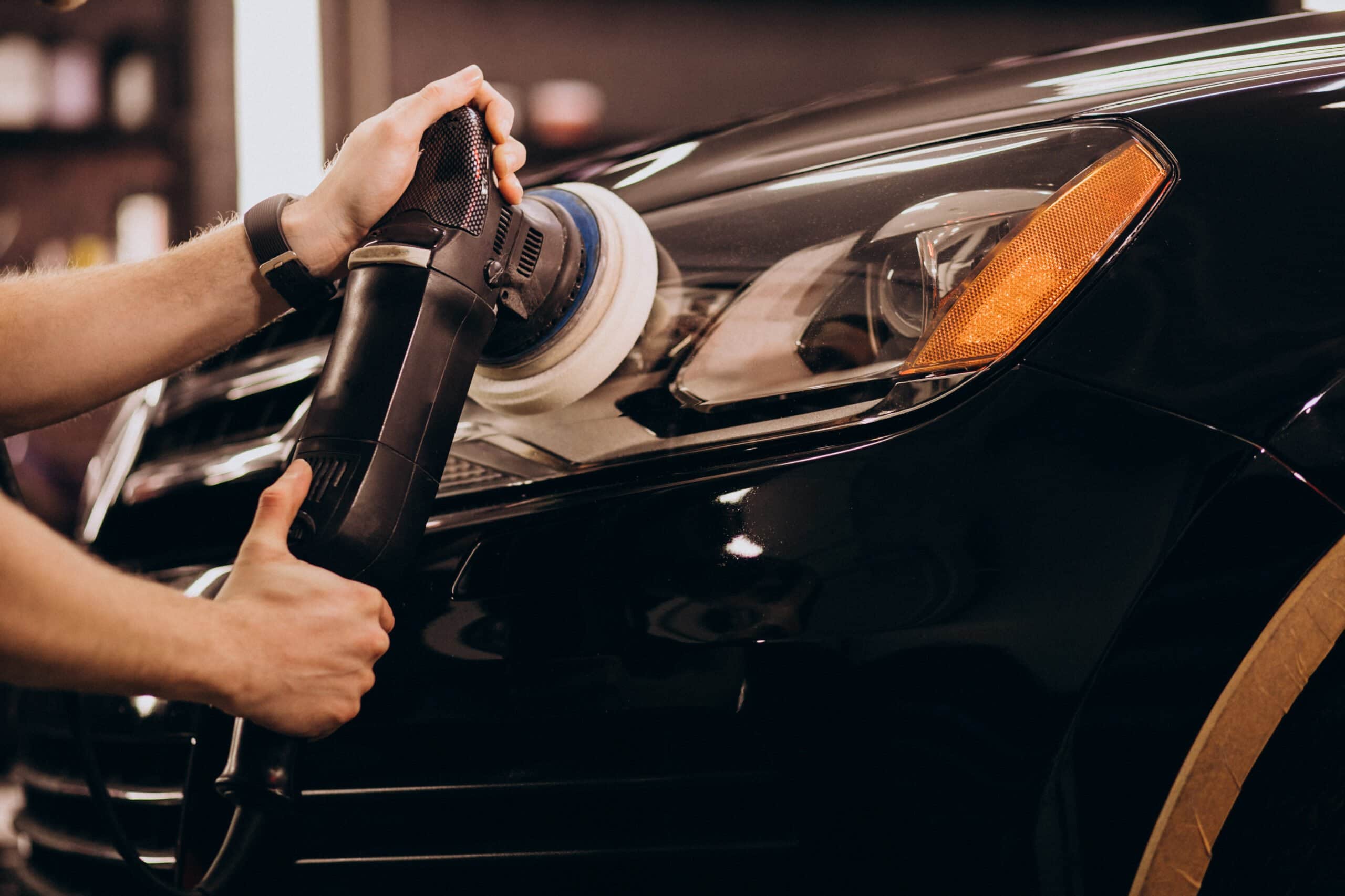
Using a dual-action machine polisher and specialized cutting compounds, we buff the lens to remove the sanding marks. This restores optical clarity, turning the satin finish into a crystal-clear window. This is where the “magic” happens, and the headlight begins to look brand new.
Step 4: UV Protection and Sealing (The Most Critical Step)
This is the step DIY kits and cheap car wash add-ons often miss. When we sand the lens, we remove the old coating. If left bare, the plastic will yellow again in 60 days.
We apply a high-quality UV-resistant ceramic coating or a specific clear coat sealant. This locks in the clarity and creates a new barrier against the Florida sun, ensuring the results last for years, not months.
Expert Note: Without a proper UV sealant, restoration is just a temporary fix. Always ask your detailer what kind of protection they apply after polishing.
Why DIY Solutions Often Fail
We have all seen the “life hacks” on TikTok or YouTube suggesting toothpaste, bug spray, or baking soda to clean headlights. While home remedies might provide a temporary improvement, they have significant limitations:
- Short-term results: Toothpaste contains mild abrasives that scrub off surface dirt, but it does not remove the deep oxidation within the plastic’s pores.
- No Protection: Household items do not leave behind UV protection. Your lights will turn yellow again very quickly, sometimes worse than before because the plastic is now exposed.
- Risk of damage: Improper chemicals (like bug spray containing DEET) can melt the plastic surface, causing permanent crazing (cracks) that cannot be sanded out.
- Uneven finish: Without a machine polisher, it is nearly impossible to get a uniform finish by hand. This can leave the light looking streaky or foggy at night.
For a safety-critical component like headlights, trust a professional headlight restoration Ocala technician.
Florida Law: Legal Implications of Dim Headlights
Beyond safety, there are legal reasons to keep your lights clear. Florida Statute 316.220 mandates that headlamps must emit a white light visible from at least 1,000 feet.
Furthermore, Florida Statute 316.238 regarding the “Use of Multiple-Beam Road-Lighting Equipment” requires that your low beams reveal persons and vehicles at a distance of at least 150 feet.
Heavily oxidized headlights often fail to meet these statutory requirements. While police in Ocala might not pull you over solely for yellow lights, it gives them probable cause for a stop, and if you are involved in a nighttime accident, poor vehicle maintenance can be a liability factor.
How to Maintain Your Headlights After Restoration
Once you have invested in headlight restoration Ocala services, proactive maintenance can extend the life of your lenses and prevent future clouding.
- Regular Washing: Frequently wash your car to remove acidic bug guts (lovebugs are highly acidic!) and bird droppings that can eat into the lens coating.
- Park in the Shade: Whenever possible, use a garage, carport, or park under a tree. Limiting direct UV exposure is the best way to prolong the life of the sealant.
- Avoid Abrasives: Never use stiff brushes or household scrubbers on your headlights; use a soft microfiber mitt instead.
- Wax/Ceramic Boosters: Every few months, apply a spray wax or ceramic booster to the headlights. This adds a “sacrificial layer” of protection on top of the coating we applied.
Choosing the Right Professional Service in Ocala
Not all restoration services are equal. You might see pop-up tents on the side of the road offering “Headlight Cleaning $20”. Be cautious! When selecting a provider, you should look for:
- Experience and Expertise: Technicians who specialize in detailing and understand the chemistry of plastics.
- High-Quality Materials: Ask if they use ceramic coatings or permanent sealants. If they just use “wax,” the results won’t last.
- Transparent Pricing: Clear, upfront costs with no hidden fees.
- Positive Reviews: Check Google Maps for feedback from other local Ocala drivers.
- Local Knowledge: A shop that understands the specific toll that Ocala’s sand and sun take on vehicles.
At Ocala Detailing, we don’t just wipe your lights; we restore them to a standard that rivals the day your car rolled off the assembly line.
Conclusion: Drive Bright, Drive Safe
Cloudy headlights are a silent hazard on Ocala roads. They reduce your visibility, increase the risk of accidents with wildlife and other drivers, and degrade the overall look of your vehicle.
According to the National Highway Traffic Safety Administration (NHTSA), nearly half of all traffic-related fatalities occur in the dark, despite only 25% of traffic being on the road. Proper lighting is your first line of defense.
Don’t wait until you are struggling to see during a thunderstorm on Silver Springs Boulevard or driving blind on U.S. 441. Restoring your headlights is a small investment that yields major returns in safety, aesthetics, and vehicle resale value.
Ready to see the difference?
At Ocala Detailing, we combine passion and precision to deliver results that shine. We treat your vehicle as if our own families were riding in it.
Contact Us Today to schedule your appointment and experience the best headlight restoration Ocala has to offer. Drive safe, drive bright!