



If you’re typing "rv wash near me do it yourself" into your phone right now, here’s the short answer: yes, you can wash your own rig with the right supplies, a few free hours, and a spot that allows it, but it takes more work than a garden hose and a Saturday afternoon. Florida’s heat, pollen, and hard water spots make RVs harder to clean than the average car, and gelcoat or fiberglass panels punish the wrong soap fast. This guide walks Ocala-area owners through the real DIY process, the hidden costs, and the point where calling a mobile pro actually saves money.
📌 Key Takeaways
- A proper DIY RV wash needs pH-neutral soap, a soft-bristle brush, and roughly 2-4 hours for a 30-foot rig.
- Marion County water restrictions and HOA rules can limit driveway washing in Ocala, Belleview, and The Villages.
- Harsh detergents and dish soap strip UV protection and accelerate oxidation on gelcoat and fiberglass.
- A mobile RV wash service typically runs less than most owners expect once supplies, water, and time are factored in.
- Ceramic coating or sealant after washing cuts future cleaning time by a significant margin.
Jump To:
- Why DIY RV Washing Sounds Simple (Until It Isn’t)
- Step-by-Step: How to Wash Your RV Yourself
- DIY vs. Professional Mobile RV Wash: Side-by-Side
- When a Professional RV Wash Service Wins
- Protecting Your Investment After Every Wash
- FAQ: RV Washing Questions Ocala Owners Ask
Why DIY RV Washing Sounds Simple (Until It Isn’t)
Quick Answer: Washing your own RV is doable, but Florida sun, water rules, and rig size make it more time-consuming and costly than most owners plan for. Knowing the real numbers before you start saves frustration later.
The Real Cost of a Home RV Wash
A true DIY wash isn’t free. Between pH-balanced RV soap, a long-reach brush, microfiber towels, and a pressure washer attachment, most owners spend $80-$150 just building a basic kit. Add water usage, and a single wash on a 32-foot motorhome can run 80-100 gallons, according to the International Carwash Association, which tracks water consumption benchmarks for vehicle cleaning.
Water Restrictions and HOA Rules in Marion County
Many neighborhoods in Ocala, Summerfield, and The Villages restrict driveway washing during drought advisories or ban it outright through HOA covenants. Florida’s water management districts periodically limit outdoor water use, and washing near storm drains can send soap and grime straight into local waterways. The Florida Department of Environmental Protection and the EPA both note that untreated wash runoff is a documented source of nonpoint water pollution, which is exactly why commercial detailers use reclaim systems and biodegradable products.
⚠️ Common Mistake: Washing an RV in a driveway that drains to a storm sewer can violate local ordinances, even if you never see a fine — the soap and grease still reach the watershed.
Step-by-Step: How to Wash Your RV Yourself
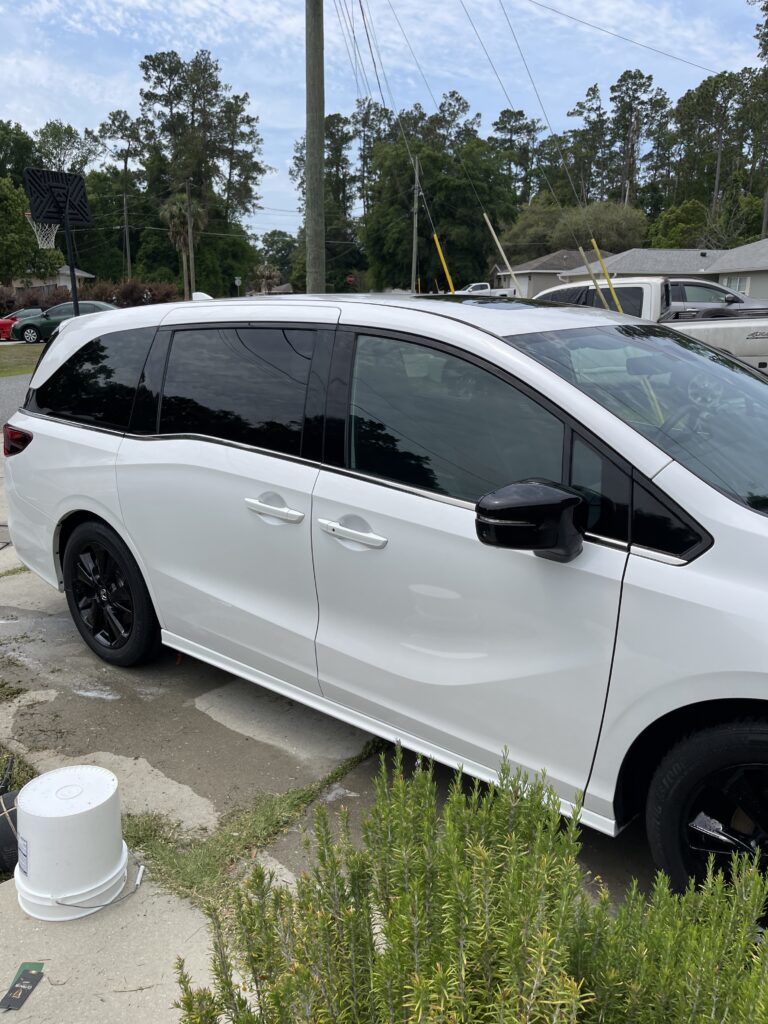
Quick Answer: A proper DIY wash follows a top-down, two-bucket method with RV-specific soap — never dish detergent — to protect gelcoat, decals, and slide seals.
Gather the Right Supplies
Before you start, line up: pH-neutral RV wash soap, a soft wash brush with an extension pole, two five-gallon buckets, grit guards, microfiber drying towels, and a UV-safe protectant for rubber seals. Skip anything labeled for household use — dish soap strips wax and dulls fiberglass over repeated washes.
The 6-Step Wash Process
- Rinse the entire RV from roof to tires to loosen loose dirt and pollen.
- Wash the roof first, since dirty rinse water will run down the sides anyway.
- Work top to bottom in small sections, rinsing before the soap dries in the Florida sun.
- Use the two-bucket method — one for soap, one for rinsing your brush — to avoid dragging grit across the paint.
- Hand-dry with microfiber towels to prevent hard-water spotting.
- Condition rubber seals and check for soft spots in the roof membrane while you’re up there.
✅ Quick Tip: Wash early in the morning or on an overcast day. Direct Florida sun bakes soap onto the surface before you can rinse it, leaving streaks on gelcoat and decals.
This process, done right, is genuinely how a solid DIY RV wash near me search turns into a finished job rather than a half-day headache. I’ve watched customers attempt this exact routine on a 5th wheel in Dunnellon and still miss the black streaks running down the awning arms — a spot most first-timers forget.
DIY vs. Professional Mobile RV Wash: Side-by-Side
Quick Answer: DIY saves labor cost but demands your entire Saturday and specialized supplies; a mobile RV wash service trades a modest fee for speed, proper equipment, and water-runoff compliance.
| Factor | DIY RV Wash | Professional Mobile RV Wash |
|---|---|---|
| Time required | 2-4 hours per rig | 45-90 minutes, hands-off |
| Upfront cost | $80-$150 in supplies | No supply investment |
| Water/runoff compliance | Owner’s responsibility | Reclaim-conscious, compliant methods |
| Roof and slide-out access | Ladder and caution needed | Trained crew, proper gear |
| Gelcoat/oxidation risk | Higher if wrong products used | Lower, uses RV-safe chemistry |
| Best for | Weekly light dust washes | Pre-trip, post-storage, seasonal deep cleans |
💡 Expert Insight: We tell customers to treat DIY washing as maintenance between deeper cleans, not a full replacement for a seasonal mobile RV wash and wax. That combination keeps gelcoat protected year-round.
When a Professional RV Wash Service Wins
Quick Answer: Oxidized gelcoat, stubborn decal residue, and full fleet or fifth-wheel jobs are where a trained crew consistently outperforms a driveway DIY effort.
Gelcoat, Oxidation, and Decal Removal
Fiberglass RV siding oxidizes under constant Florida sun, turning chalky and dull. Removing that chalk requires compounding and polishing steps beyond a basic wash, and our gelcoat restoration process is built specifically for that stage. Peeling decals or striping also need heat and slow, careful pressure — pull too hard and you can tear the vinyl or lift the clear coat underneath it.
Fleet, Toy Hauler, and Fifth Wheel Considerations
Owners with toy haulers, fifth wheels, or multiple units — think contractors and horse property owners around Silver Springs or Weirsdale — often don’t have the driveway space or hours for DIY washing at scale. For businesses running multiple units, our fleet detailing service and southeast decal removal & fleet wash work extend the same principles to entire lots at once.
📊 Data Point: According to the RV Industry Association, regular exterior maintenance is one of the top factors owners cite in preserving resale value on motorhomes and travel trailers.
Protecting Your Investment After Every Wash
Quick Answer: A clean RV without protection is a short-term win. Sealants and coatings extend the life of every wash, DIY or professional.
Ceramic Coating and Sealants
A quality sealant or ceramic coating bonds to gelcoat and repels UV, tree sap, and mineral deposits between washes. This means dirt and pollen rinse off faster next time, cutting your future DIY effort roughly in half.
Seasonal Maintenance Schedule
Owners who tour or store their rig seasonally in Marion and Sumter counties benefit from a predictable rhythm rather than washing only when it looks dirty.
| Season | Recommended Action |
|---|---|
| Spring (pre-travel) | Full wash, wax check, seal inspection |
| Summer | Bi-weekly rinse to remove pollen and bug residue |
| Fall | Deep wash before storage, roof inspection |
| Winter (storage) | Cover check, spot cleans only |
⚠️ Common Mistake: Storing an RV dirty over winter lets bird droppings and sap etch into gelcoat permanently — always wash before covering it for the season.
For deeper structural upkeep beyond washing, our guide on fifth wheel and travel trailer maintenance covers seal checks and roof care in more depth. And if you decide the DIY route isn’t for you this season, our RV wash and wax service covers the full routine in one visit.
FAQ: RV Washing Questions Ocala Owners Ask
Is there an rv wash near me do it yourself location with a dump-safe drain in Ocala?
Some self-serve truck washes near Ocala and Belleview allow RV washing with drainage systems, but availability changes and not all accept large motorhomes. Call ahead to confirm rig-length limits and drainage compliance before you drive over.
What soap is safe for washing an RV yourself?
Use a pH-neutral, RV-specific wash soap rather than dish detergent or generic car soap. Dish soap strips wax and UV protectants, which speeds up gelcoat oxidation in Florida’s sun.
How often should I wash my RV in Florida?
A light rinse every two weeks during pollen season and a full wash monthly is a reasonable baseline for most owners in Marion County. RVs stored outdoors near trees, like many properties in Ocklawaha or Silver Springs, may need more frequent attention.
Can I pressure wash my camper or travel trailer myself?
Yes, but keep the nozzle at a wide fan setting and stay several feet back from seams, vents, and slide-out seals. High pressure at close range can force water past seals and into the wall cavity.
Does a boat wash near me follow the same rules as an RV wash?
The core principles overlap — pH-neutral soap, gentle brushes, and careful rinsing — but boats have gelcoat below the waterline that needs specific marine-safe products. If you’re searching for a boat wash near me alongside RV care, ask providers if they service both.
Is a mobile RV wash service worth it if I already wash it myself sometimes?
Many owners use both: DIY rinses for light maintenance and a scheduled mobile service for deeper seasonal cleans, oxidation removal, or pre-trip prep. This hybrid approach balances cost and convenience for most households.
What’s the difference between an RV wash and full RV detailing?
A wash cleans the exterior surface, while RV detailing includes interior cleaning, gelcoat restoration, and protective coatings. If your rig hasn’t been detailed in over a year, a wash alone won’t address oxidation or interior buildup.
Final Thoughts
A DIY rv wash near me do it yourself approach absolutely works for light, regular maintenance, provided you use the right soap, respect local water rules, and stay gentle with gelcoat and seals. Where it gets expensive is oxidation, decal damage, or the sheer time cost of washing a 35-foot motorhome alone in July heat. Many Ocala-area owners land on a hybrid routine — DIY rinses between scheduled professional visits — and it tends to protect resale value best over time. As of 2026, water-use rules and HOA restrictions across Marion County continue to shift seasonally, so always confirm current guidance before washing at home.
Next steps:
- Check your HOA or county water-use rules before washing at home this week.
- Build a basic DIY kit with pH-neutral RV soap and soft brushes.
- Schedule a seasonal deep wash or gelcoat check with a mobile pro.
- Add a sealant or ceramic coating to extend time between washes.
Ready to skip the ladder and the hose this time? Book a mobile RV wash and wax appointment with our Ocala-based team today.